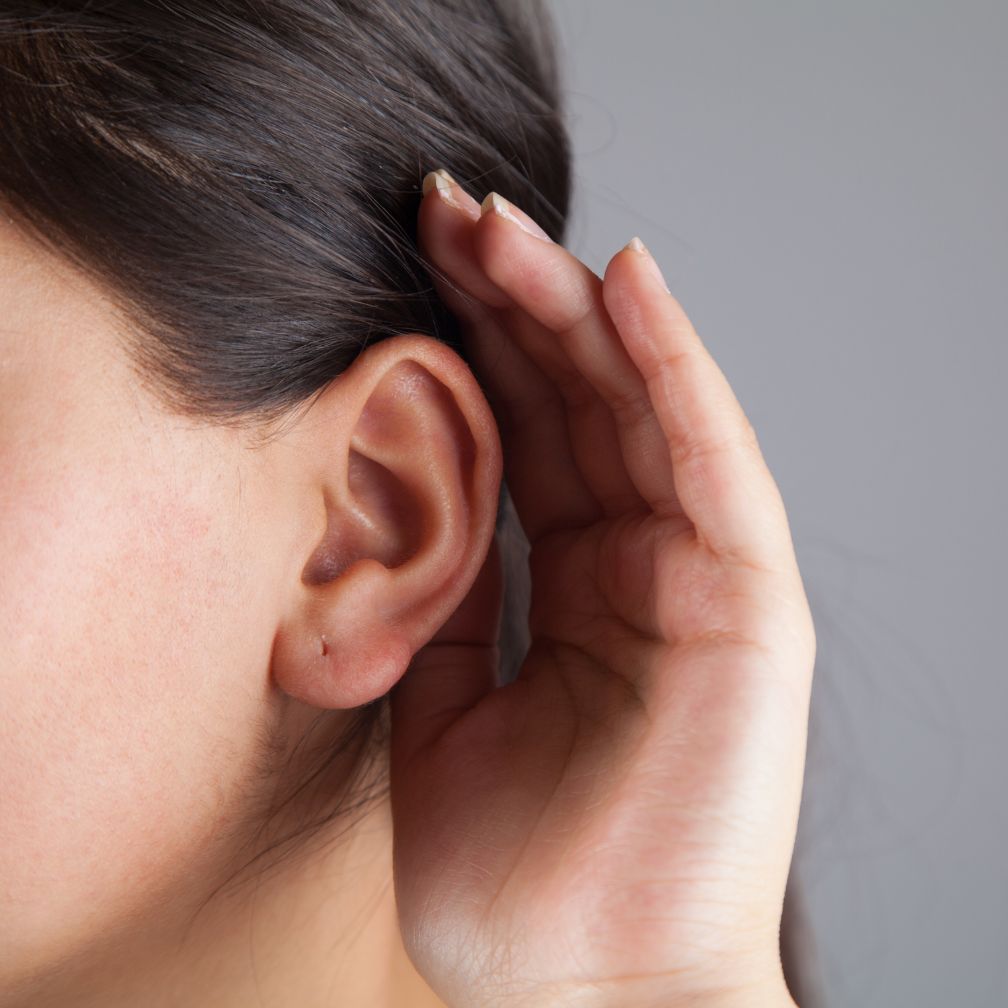
What’s that strange noise that kind of sounds like white noise, or wind in your ears? Why can’t anyone else hear it? Rest assured, this physical perception is definitely not a product of your imagination.
Fortunately, your symptoms do not point to “phantom ring syndrome,” a psychological habit among heavy smartphone users who mistakenly believe their device is vibrating or ringing in silence.
In most clinical scenarios, this localized baseline static is a direct manifestation of tinnitus. Your perception of this sound is completely valid, though you must remain aware that several everyday variables can cause tinnitus to flare up.
While this background static is present, you can generally still decode the words of those around you. It merely creates a frustrating sensation where a phantom frequency is constantly layered over every real-world sound.
In this guide, we will investigate the neurological origins of this static, define its pathology, and explore proven methods to minimize or eliminate its impact.
Demystifying Tinnitus: Connecting Auditory Damage to Phantom White Noise
In the vast majority of medical cases, this persistent internal static is a secondary symptom of sensorineural hearing loss. It is uniquely defined by a steady or variable acoustic signal that registers on top of everyday conversations. Depending on the exact etiology of your condition, the frequency may blend into the background for most of the day. Conversely, you may be trapped in a severe cycle where the internal static feels absolutely overwhelming, disrupting your concentration and peace of mind.
You have likely attempted to describe this exhausting sensory distortion to friends, but this particular manifestation of hearing loss is incredibly abstract to those with normal hearing.
You might find yourself wondering how a humming noise that sounds so incredibly vivid inside your skull can have no external reality. This paradox leads many to worry if they are suffering from a central mental delusion or cognitive misfire. You may find yourself asking how a silent hum can completely disrupt your concentration and impair your social interactions. Or utterly destroy your capacity to find peace, unwind, and sleep soundly through the night?
Why Silence Paradoxically Amplifies Your Tinnitus Symptoms
You have likely observed that as your immediate surroundings become increasingly silent, your perception of the tinnitus scales up dramatically. This occurs because the phantom signal inside your pathways no longer encounters any external acoustic competition; for instance, the average adult maintains absolute silence in their bedroom during sleep hours. They operate without a television background feed, avoid running any radio streams, and eliminate all ambient audio. If you combine a silent room with late-night introspection, the moment your awareness drifts to the localized humming, it transforms into an inescapable focus point that artificially amplifies the distress. Whether you experience soft or loud noises, low or high pitches, a quiet bedroom at nighttime is the perfect situation for tinnitus to take hold.
Is that weird sound like wind really tinnitus?
While explaining the condition to normal-hearing peers is a major hurdle, comparing notes with another person who has tinnitus can create unexpected doubt. Because their internal audio profile may feature entirely unique pitches or patterns compared to your own, you might mistakenly assume your specific condition has a different medical diagnosis.
However, statistically speaking, your symptoms are almost certainly a manifestation of the exact same condition. The explanation is simple: this auditory deficit is incredibly diverse, crafting unique sensory experiences for each patient’s brain layout. Individual experiences cover a broad acoustic spectrum, including regular perceptions of:
- A continuous blanket of high-frequency digital static
- Humming
- Buzzing
- A piercing, high-pitched metallic ringing
- An episodic, heavy thumping localized behind the eardrum
- A flat, continuous telephonic dial tone
In almost all instances, you are completely isolated in your perception of the tinnitus-induced white noise. Because of this, a traditional doctor cannot physically audit or hear the frequency to validate your complaint. The practitioner simply has to trust your diagnostic description, as there is no physical signal for them to measure.
This lack of objective testing can easily make a patient feel completely invalidated when consulting a general doctor who lacks specialized understanding of ear pathways.
Consider the case of Thomas, a veteran steelworker, who recounted: ‘When the constant buzzing first developed, I brought it up during a checkup with my regular doctor. Although the clinician noted that it was likely a case of tinnitus, he didn’t seem to comprehend how destructive the noise was to my focus.’ He spoke about it like it wasn’t really there. He seemed to think I could just ignore it and really didn’t offer any solutions.”
Transitioning your care to an expert otolaryngologist eliminates this frustration, ensuring your symptoms are validated while mapping real-world treatments. Sometimes the sound itself can offer clues as to how to treat it.
Investigating Vascular Variations: Rushing and Whooshing Frequencies
What makes it even harder to describe this noise to a doctor is the fact that there are so many different ways tinnitus can manifest itself. For example, if you hear a whooshing sound or a thumping sound in your ears, which is then followed by a steady series of beats that mimics your pulse, you may actually have a rare type of tinnitus called pulsatile tinnitus.
The good news is that pulsatile tinnitus can be treated more effectively than regular tinnitus since it’s usually caused by one or more health problems, like high blood pressure or issues with your arteries.
That whooshing sound can also be brought on by the flow of blood through narrow veins in your head, which is called a bruit. It is absolutely imperative to have this symptom evaluated by a specialist, as this mechanical murmur can occasionally warn of severe cardiovascular blockages that precede an acute stroke or seizure.
Sometimes hearing specialists can hear that buzzing noise, too
Make no mistake: tinnitus is a highly disruptive, legitimate medical disorder that inflicts significant stress on a patient’s routine. Although regular ringing escapes external tracking, unique objective cases allow an ear specialist to leverage diagnostic listening tubes to physically capture the precise internal sound passing through your tissue. It is vital to understand that this objective phenomenon is unique to circulatory-driven cases, a category that is statistically much rarer than standard neurological tinnitus.
Tracing the Roots of Your Head Static: Common Medical Causes
In most clinical case histories, the principal cause behind this internal static is a history of sustained exposure to hazardous noise levels. Consequently, we see a massive volume of cases among stage performers, industrial operators, and manual laborers who face heavy acoustic strain day in and day out over decades.
Several specific employment sectors generate high enough decibel baselines to directly induce permanent tinnitus, including:
- Factory Work – You’re around noisy machines all day long, so that’s got to do something with your senses, right? On top of the noise, factory work can be stressful, which is another factor that leads to tinnitus and, over time, can make it much worse. Do you work near a pneumatic riveter? They are some of the worst, clocking in at over 125 decibels, which is loud enough to cause immediate, permanent hearing loss, as well as severe cases of tinnitus.}
- Modern Farming – Don’t blame it on the roosters. While those loud, early-risers clock in at around 90 decibels, there are many things on the farm that are much louder. Tractors, combines, cherry-pickers, milking machines… all of these farming implements make a lot of noise. Need to repair the fence? Even your table saw can pump out over 85 decibels, which is damaging over long periods of time.}
- Aviation Professionals – An active jet engine unleashes an incredible 140 decibels of sound energy, even when measured from a distance of 100 feet. Although commercial and private pilots routinely utilize specialized noise-attenuating headsets, operators of smaller aircraft sit in extreme proximity to these power plants. Standard consumer ear protection simply lacks the acoustic blocking power to completely nullify this deep structural vibration, meaning those hundreds of flight hours logged over a career slowly and steadily chip away at your baseline hearing.}
- Motorcycle Cop – You don’t have to be a police officer to ride a motorcycle, but any job that has you riding around on this noisy vehicle all day puts you at risk of developing tinnitus and eventually losing your hearing. The same goes for snowmobiles and jet skis…though chances are you’re not riding these vehicles at work unless you have a very interesting and, let’s face it, fun job.}
- Bartender – A person at the end of the bar calls out for a gin and tonic, and you need to be able to hear their order. But the music in these places is often so loud that you can’t hear someone right next to you, so your ears are constantly straining and working overtime to pick out what people are saying over the din. And if a live band is playing? Your ears might get damaged in the same way a musician’s hearing will.}
In each of these scenarios, the primary cause is the mechanical destruction of the tiny hair cells housed inside your internal ear labyrinth due to relentless noise. These delicate cellular structures are responsible for converting physical sound vibrations into electrical signals that the brain can decode into meaningful language. Unlike the rest of your body, when these hairs are damaged, they don’t heal or reproduce, and leave you with a distorted sense of hearing.
What makes this strange noise in my head worse?
Beyond direct exposure to loud volumes, specific lifestyle choices and physiological conditions can cause the white noise in your head to worsen.
- Anxiety and Depression – Both of these emotional conditions establish a highly destructive psychosomatic cycle. As your daily anxiety or depressive symptoms flare up, your internal head static becomes significantly more intense, which naturally causes your mental health to deteriorate further.}
- Neglecting Auditory Self-Care – Your ear pathways signal distress through pain or fullness when environmental sound hits dangerous thresholds. Do not simply ignore the warning signs or push through the noise; prioritize ear protection, because your baseline hearing cannot be restored once it is lost.}
- Circulatory Stress – Neglecting your cardiovascular metrics can compromise the delicate arteries supplying your internal ear networks. This lack of proper blood flow causes immediate spikes in internal head noise and steadily worsens your overall hearing loss over subsequent years.}
- Smoking and Tobacco Use – The chemical dependency and restlessness that develops between nicotine doses directly amplifies your internal ear noises. While smoking another cigarette appears to calm the symptoms temporarily, it is actually accelerating the core damage by damaging the micro-vessels that support your hearing pathways.}
- Nutritional Choices – Certain dietary components, especially concentrated caffeine and chemical sweeteners, can irritate your nervous system and increase ear ringing. Implementing a daily food tracking journal allows you to monitor your chemical intake alongside your tinnitus levels to systematically discover your personal food triggers.}
- Social Environments – Interacting with highly critical or anxiety-inducing people can elevate your heart rate and worsen your ear static by provoking stress and depressive patterns. It is vital to audit your close relationships to protect your health, determining whether these connections are worth the toll they take on your auditory peace. Ultimately, you cannot control how other people act, but you have complete control over how often you interact with them.}
- Pregnancy – Approximately one-third of women experience localized ear ringing during gestation, a phenomenon routinely triggered by shifting endocrine baselines and increased cardiovascular demands.}
- Deep wax build-up – Earwax pressing on the eardrum can cause odd sounds. Having that wax removed professionally could instantly stop the ringing in some cases.}
- Medications and Over-the-Counter Drugs – Certain prescription opiates, specialized antibiotics, high-dose diuretics, oncology drugs, and routine retail pain relievers possess well-known ototoxic properties that trigger or worsen tinnitus. You should actively discuss your medication list with an ear specialist and your general doctor to discover safer alternatives and mitigate these side effects.}
Reviewing Effective, Clinically Proven Tinnitus Management Options
If your history includes conditions that directly impact your auditory health, coordinate with a healthcare professional. Some conditions make tinnitus worse, like anxiety or high blood pressure.
After all primary medical and vascular variables have been successfully managed, you can confidently explore specialized audiological interventions. Your rehabilitation roadmap can successfully integrate options like:
- Mindfulness Interventions – Incorporating daily meditation, restorative yoga, or alternative somatic relaxation exercises can drastically lower your neuro-chemical stress response. Unfortunately, modern educational systems rarely teach individuals how to self-regulate stress naturally without resorting to chemical substances. Despite this gap, thousands of patients actively pursue these holistic habits because clinical data confirms they successfully lower tinnitus awareness.}
- Using white noise to mask the sound while you sleep. White noise can offer immediate relief. Never try to drown the sound out with earbuds or with other loud noise exposure. That would only make the symptoms worse over time.}
- Modern Hearing Solutions – Investing in current hearing instrument technology can completely change your symptoms through specialized acoustic cancellation. Today’s devices are built with advanced processing chips that offer sophisticated tinnitus management programs. These units can be dynamically adjusted by an audiologist to produce a gentle sound layer that seamlessly masks or cancels the unique frequency you are tracking.}
- Acoustic Neuromodulation – This clinical technique focuses on retraining your brain’s auditory processing centers to filter out the phantom noise. By introducing a gentle sound layer that matches your personal tinnitus profile, a specialist can desensitize your neural pathways. This process successfully coaches your mind to ignore the internal loop and prioritize real-world sounds, like conversations with family.}
- Cognitive Behavioral Therapy (CBT) – This specialized behavioral methodology gives patients the tools required to break free from anxious obsession and hyper-vigilance. If you are stuck in a habit of tracking negative life events or worrying about uncontrollable global issues, a CBT protocol can help. It provides the neurological retraining needed to anchor your focus on positive milestones and personal goals, effectively lowering the emotional stress that intensifies your ear ringing.}
The Reality of White Noise Therapy: Management vs. Cure
You’ve heard of fighting fire with fire, but what about fighting white noise with white noise? A major clinical trial recently conducted in the United Kingdom revealed that while ambient acoustic masking provides substantial relief to sufferers, it must be combined with comprehensive behavioral therapies to deliver long-term results.
To be perfectly transparent, there is at present no definitive medical cure for chronic sensorineural tinnitus; rather, science offers a variety of highly effective management strategies to suppress your awareness of the noise.
So what else can you do to treat your tinnitus? Your absolute highest priority should be to secure a professional hearing evaluation from an expert. An evaluation will provide clear data showing how severely the background hum is compromising your ability to follow along when family members speak. After that, you should discuss treatment options with your local hearing experts.
When White Noise Deceives Your Brain: The Science of Musical Ear Syndrome
This probably isn’t tinnitus. Rest assured, this specific illusion does not indicate that you are developing schizophrenia, dementia, or any other central psychiatric illness. Statistically, you are simply experiencing a well-documented neurological effect called Musical Ear Syndrome, pattern-seeking apophenia, or acoustic pareidolia. Your mind is hardwired for intense structural processing, meaning it will aggressively scan unshaped noise in an effort to synthesize familiar audio forms. When exposed to a flat wall of static, your mind can miscalculate the input and overlay an expected acoustic memory onto the noise. For example, pareidolia is when you interpret those meaningless noises into something you’ve heard before, such as music. That said, if you hear detailed instruments or singing when the room around you is perfectly quiet, the symptom is classified as a distinct musical hallucination.